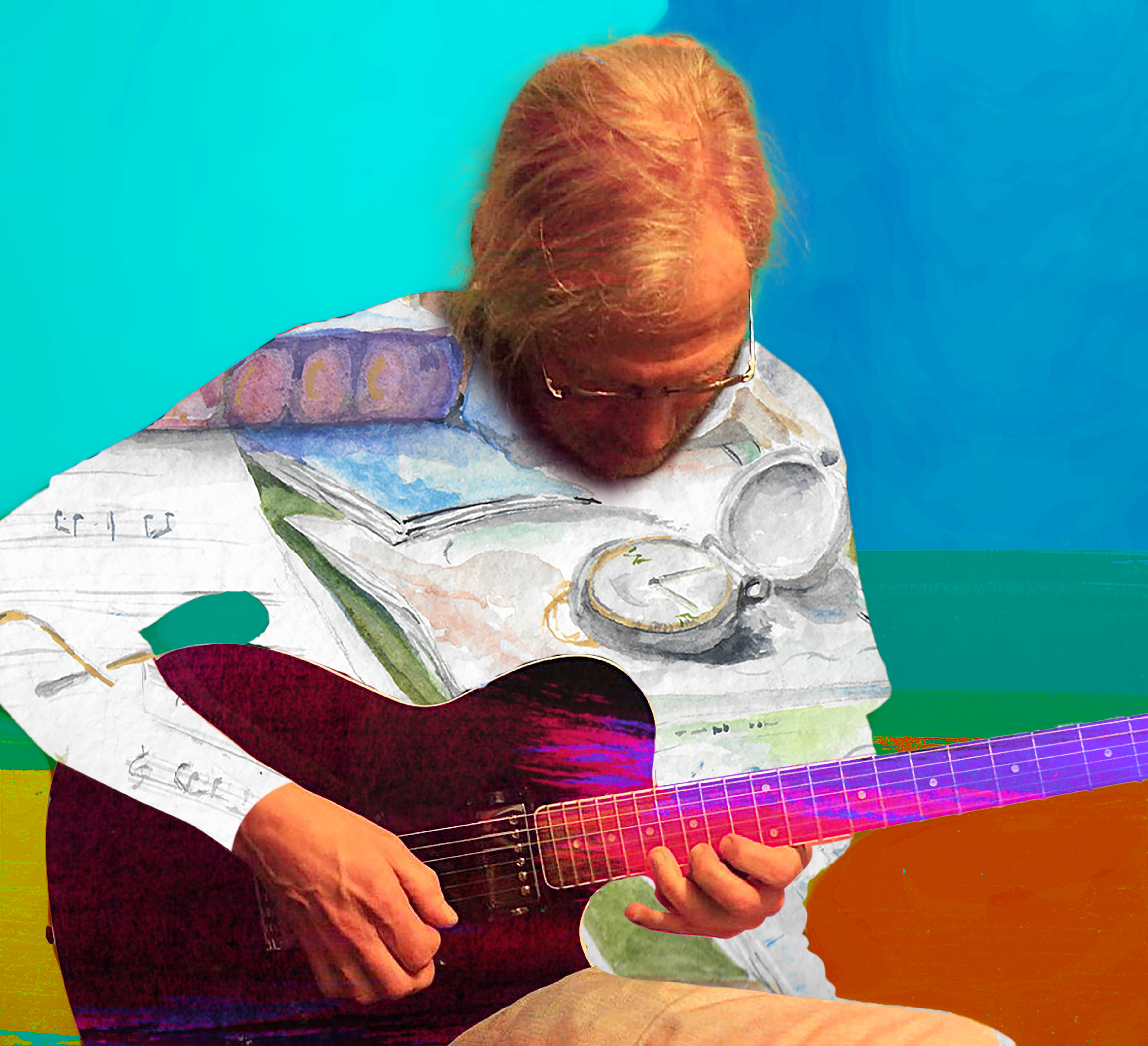
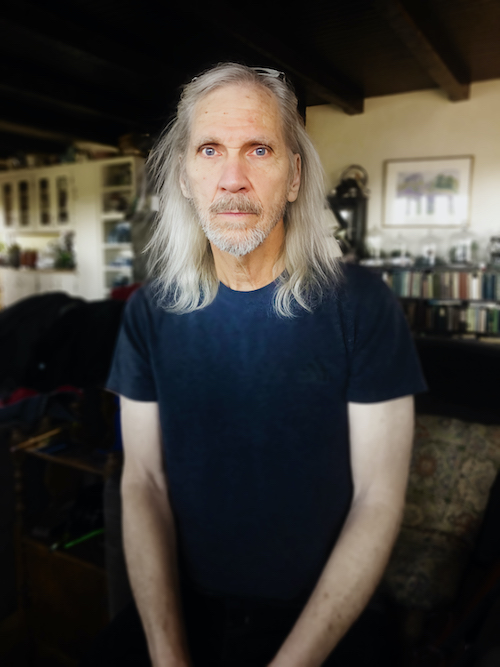
Composer and Guitarist
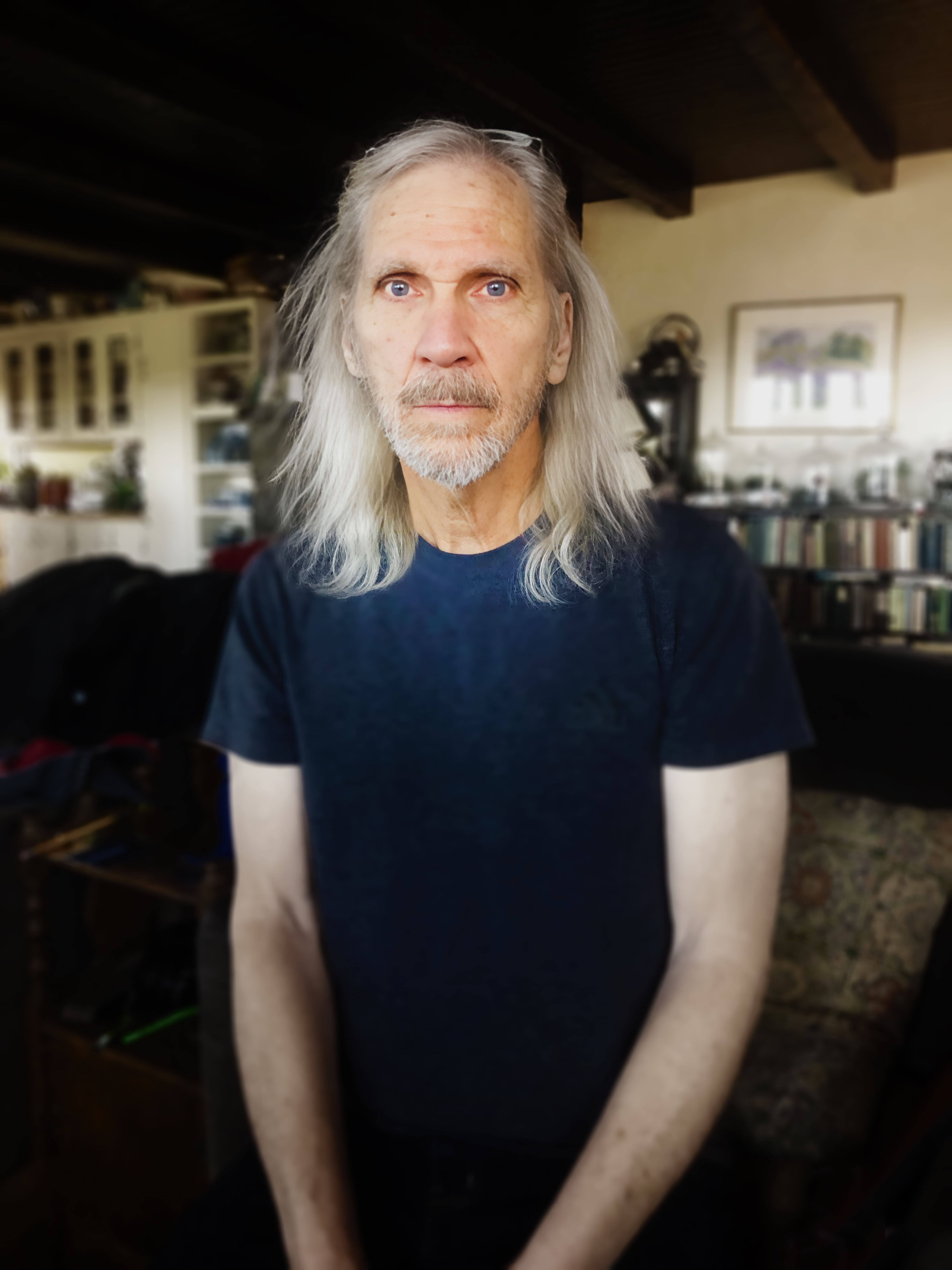
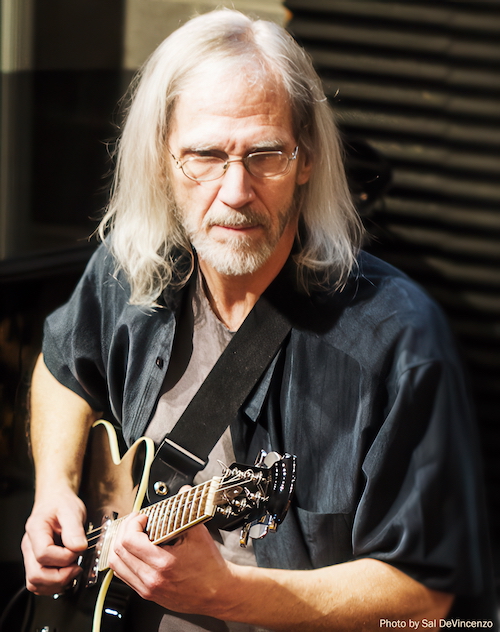
MIKE JOHNSON,
co-founder of the legendary, longstanding American
experimental / Rock In Opposition band
THINKING PLAGUE,
unleashes his formidable compositional skills
to create his first 'solo' album,
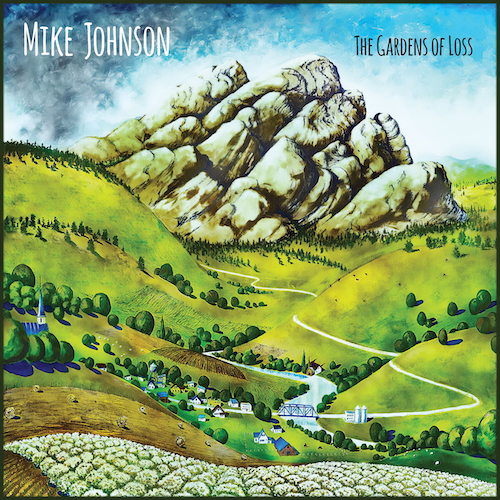
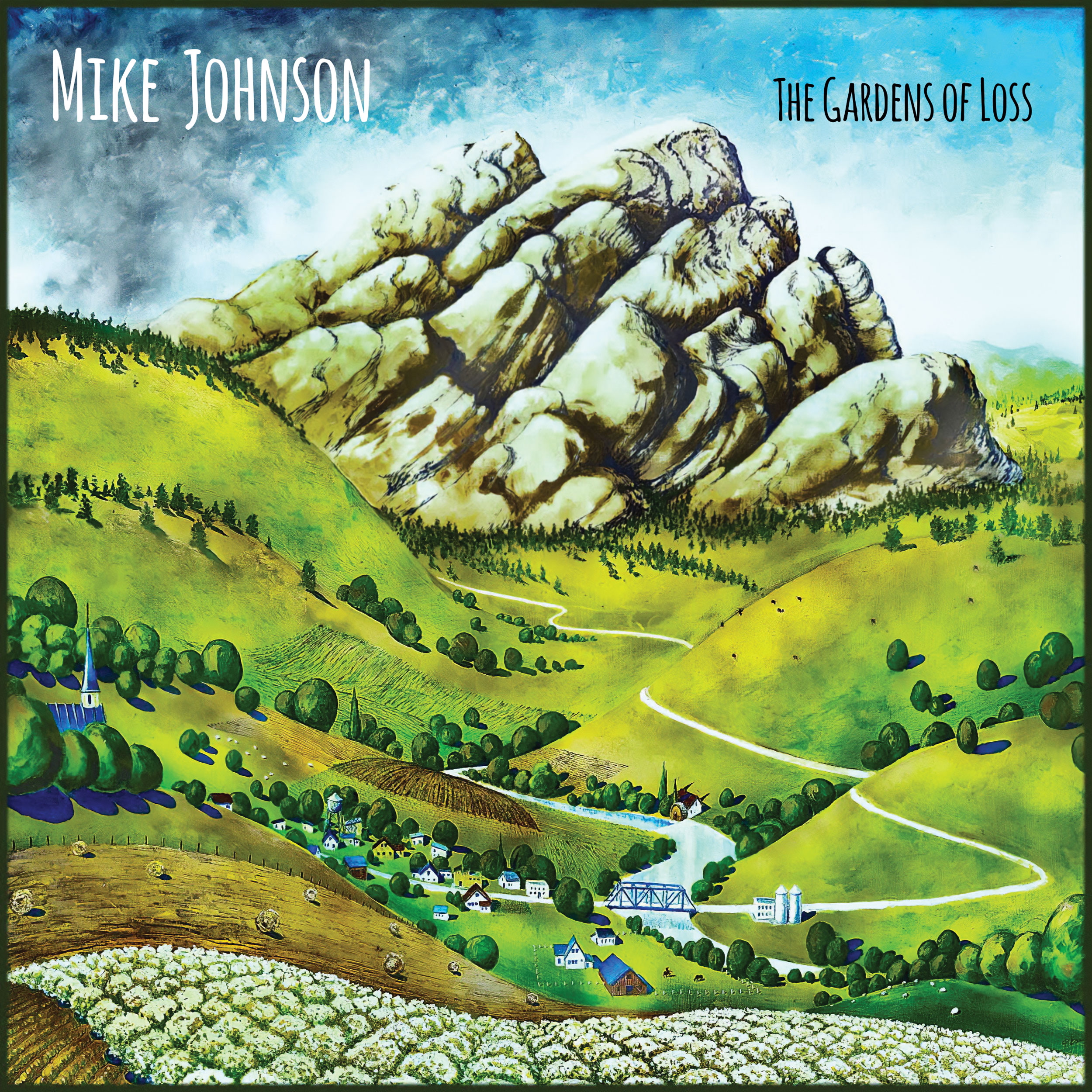
THE GARDENS OF LOSS,
an unflinchingly original, post-genre, orchestral work
steeped equally in
rock and classical tradition,
and performed by a global orchestra
Destined to be one of 2026’s most ambitious, adventurous, and relevant releases, The Gardens of Loss features performances by 19 musicians
currently based in the USA (Johnson, several Thinking Plague alumni, and others); Canada (Kimara Sajn); Portugal (Nuno Mourão); Spain (Pau Sola Masafrets); Sweden (Simon Steensland, Morgan Ågren), and
The Netherlands (Oene van Geel, Pablo Rodriguez, César Puente Sandoval, George Dumitriu)
In 1982, Mike Johnson co-founded Thinking Plague, a storied band whose forty-five year history has seen it cleave consistently to the extreme limits of what is possible to do within rock music. Much of the music it released has owed more to traditions external to rock, such as folk, chamber music, and particularly, the avant-garde tradition of twentieth-century classical music. Its thread has always been twisted into a thicker yarn, variously labeled with terms such as ‘art rock’, ‘avant-rock’, ‘avant-progressive’ and also ‘Rock in Opposition’(RIO), a term associated with European outfits such as Henry Cow, Univers Zero, Art Zoyd and Present who fused elements and instruments from rock and 20th century classical music with compositional rigour and DIY aesthetics. Thinking Plague have often been cited cited as the leading light of the American arm of the ‘Rock In Opposition’ movement. Genre-defying and, above all, unique, Thinking Plague’s music can be described equally as post-rock and/or post-classical.
Leader and writer Johnson is influenced by harmonically adventurous twentieth-century classical music, as can be heard in the ambiguous tonality of the music, and the rigour of his dense, complex compositions. Johnson, like most rock musicians, is self-taught, but very knowledgeable, and his fusion of rock and classical music is as seamless as it is compelling. His electric guitar, whose hard-edged, mordant timbres cut deeper and more savagely than anything available to the classical arranger, doesn’t dominate the band’s sound, but takes its place as one voice among many. And for the first time ever amongst his 8 albums as leader of Thinking Plague, he has had the opportunity to use orchestral instrumentation as one of the pillars of this work. Perhaps this is the reason why this is a Mike Johnson album and not a Thinking Plague album?
Johnson steps in to explain and help guide our journey through The Gardens of Loss:
“As some will know, most Thinking Plague music and lyrics over the years were written by me, and the band has essentially been my project since the mid-nineties. But for this album, I was hoping to be free of the some of the expectations and assumptions that come with the name Thinking Plague. I wanted to try some different things, and take full credit or blame for the outcome. One of my main objectives was to make an album incorporating an orchestra, of sorts at least, which required me to employ a lot of new people, such as a string quintet, a new flutist, an oboist, bassoonist, trumpeter, trombonist, etc. And I wanted some different musicians in key roles - like Simon Steensland on bass and Morgan Ågren and Kimara Sajn on drums, and Jeremy Kurn on piano. In my mind, it wasn't Thinking Plague. I know that some people will say it sounds like Thinking Plague, but what they should realize is that it sounds like me. Not to say that it's literally more of the same. I don't think it is.
There's a lot more, and more varied, orchestral instrumentation - real players; not samples. Sometimes, thanks to the "magic" of overdubbing, it will sound like a large orchestra. Other times you can hear various winds, reeds, brass and/or string ensembles of different sizes. Also, I think the eight song-pieces on the album have more varied styles and character - some quite a bit more accessible than typical THINKING PLAGUE music, and some at least as complex and advanced as THINKING PLAGUE. But the aesthetic is generally more orchestral in the 2Oth century sense, while still incorporating some intensely "rock" elements. It's not "classical" orchestration pasted onto rock band tracks, rather, it's integrated to sound like a big electro-acoustic ensemble with many voices. It's very organic, I think.
Anyone who has followed Thinking Plague will know that my subjects have mostly always been pretty dark. That's because I feel it is my duty, sort of, to call out and respond to the injustices and environmental harms that seem to be so much of humanity's legacy on planet earth. And in the current circumstances I think it's more important than ever, although as a musical artist I don't want to create mere protest songs or ideological "anthems." Rather, I strive to express human emotions in response to what has happened or is happening - where things seem to be going.
For example, the first track "Dies Irae," which is Latin for Day of Wrath, expresses the fear of what might happen if the political situation develops a certain way in America - which it seems to be doing. I think it's pretty obvious what I mean. Another example is the title track "The Gardens of Loss," which deals with the bittersweet experience of nature's beauty and the bereavement and regret one feels when they perceive that it is fading, dying as a result of human stupidity and greed. All the tracks deal explicitly or implicitly with some kind of regret, loss or threat of loss, etc., although the track "Boys with Toys" takes a more facetious approach.
I realize that the obvious question posed by my releasing this as a Mike Johnson album will be about the likelihood of another Thinking Plague record and honestly, I can't say for sure at present. I’m not sure where things are going from here. I intend to keep writing music, but I'm not sure yet for whom or under what circumstances. Although I do still have hankerings to do it.”
– Mike Johnson, December 2025
The Gardens of Loss press release