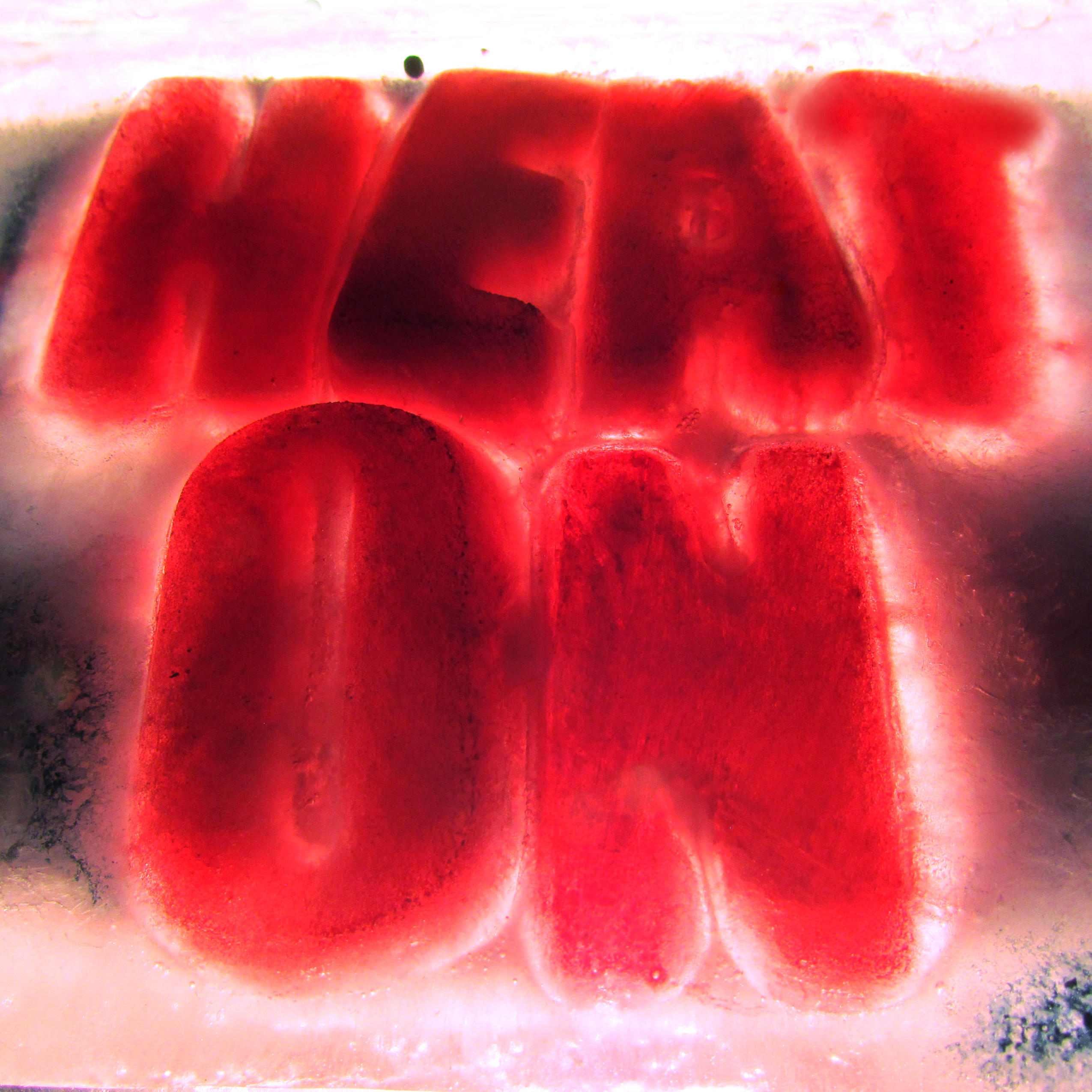
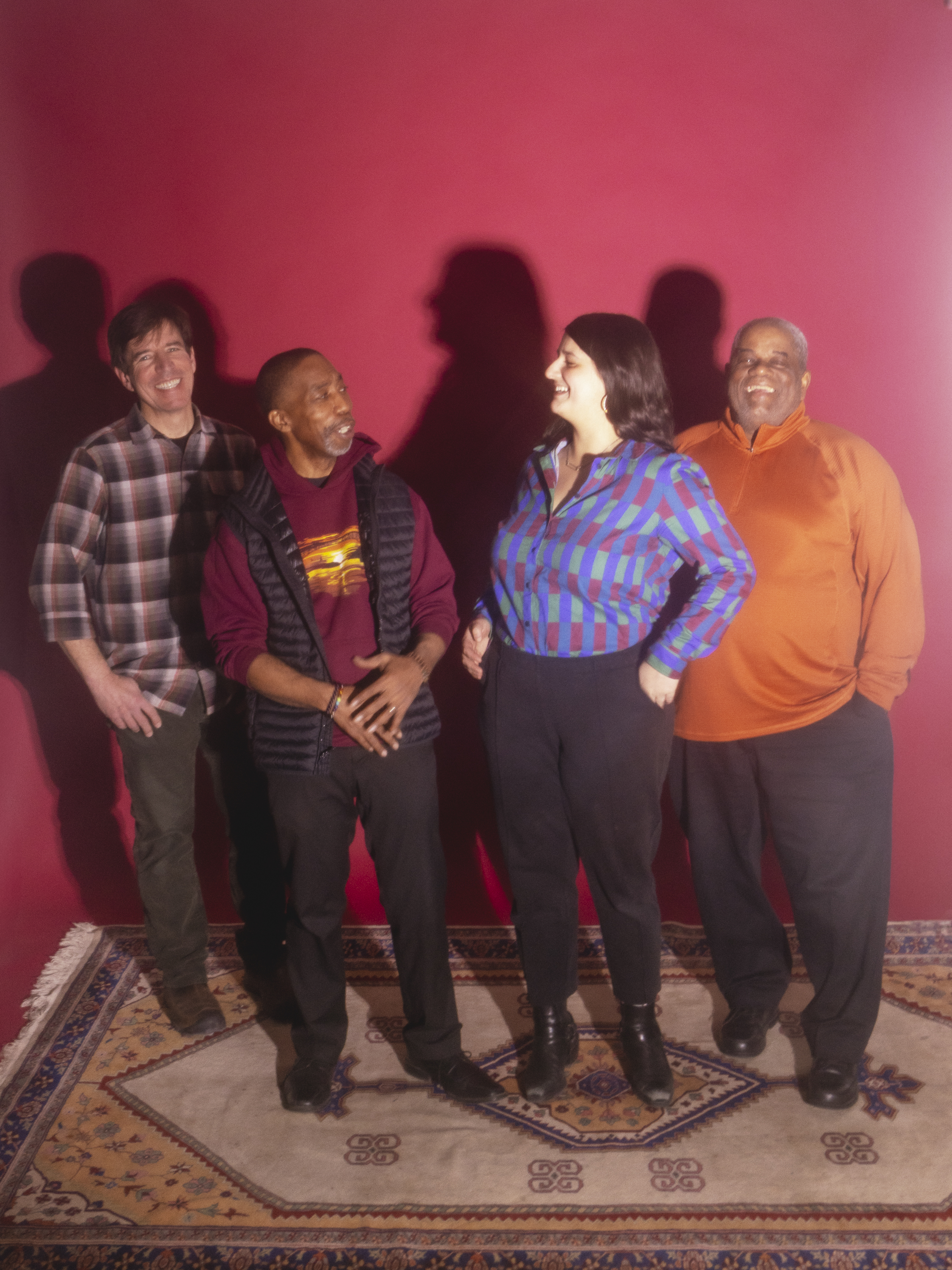
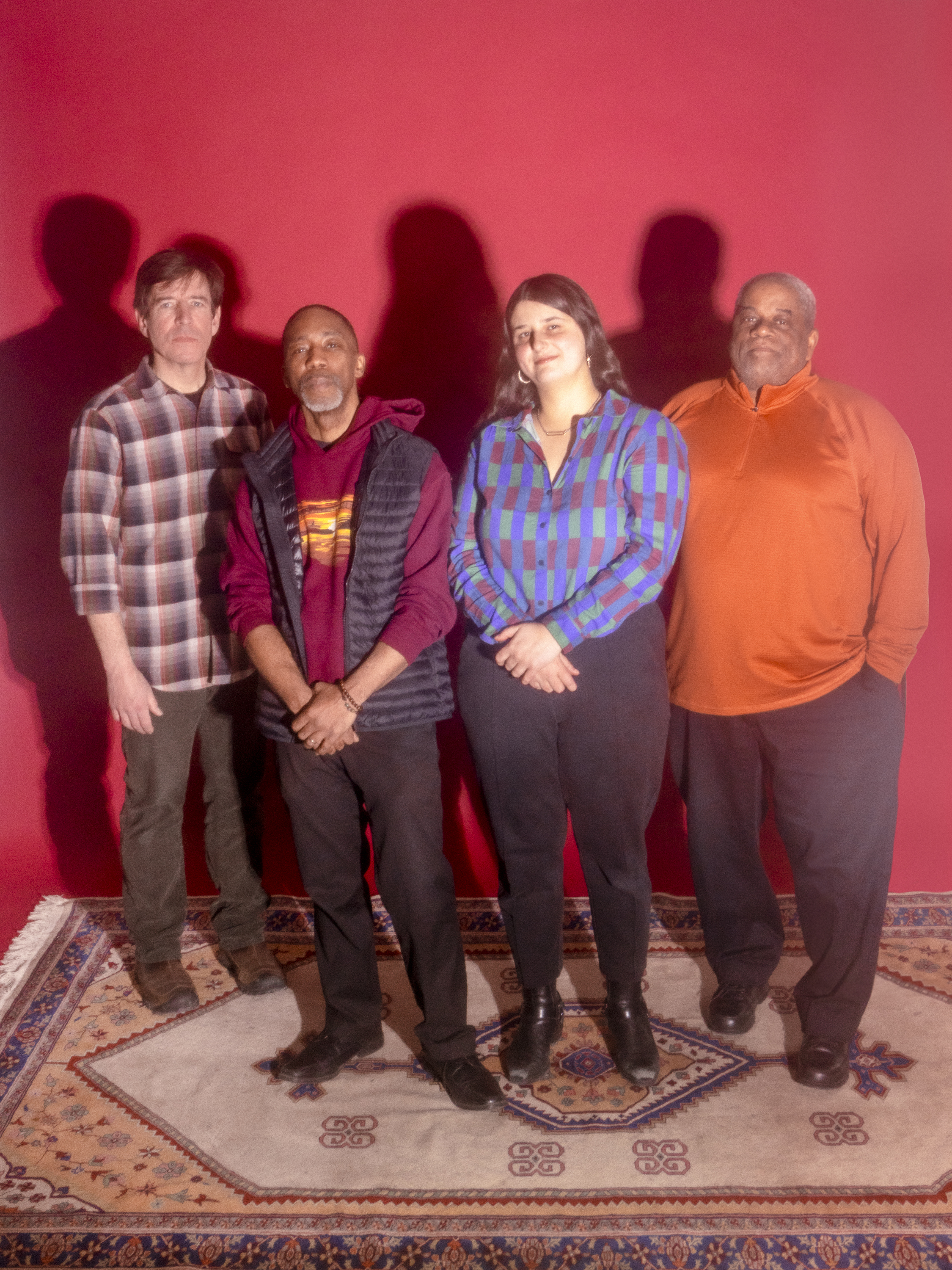
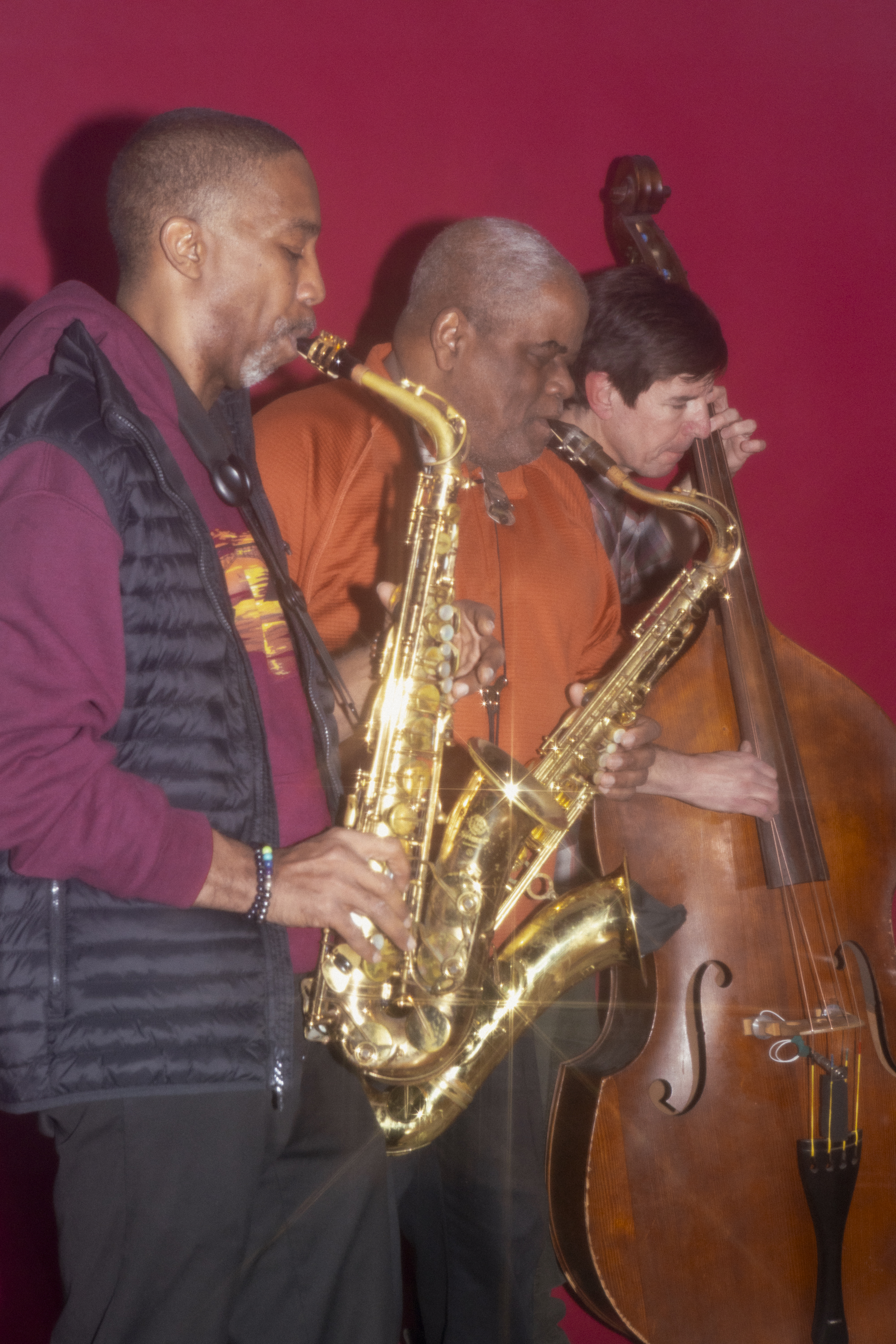
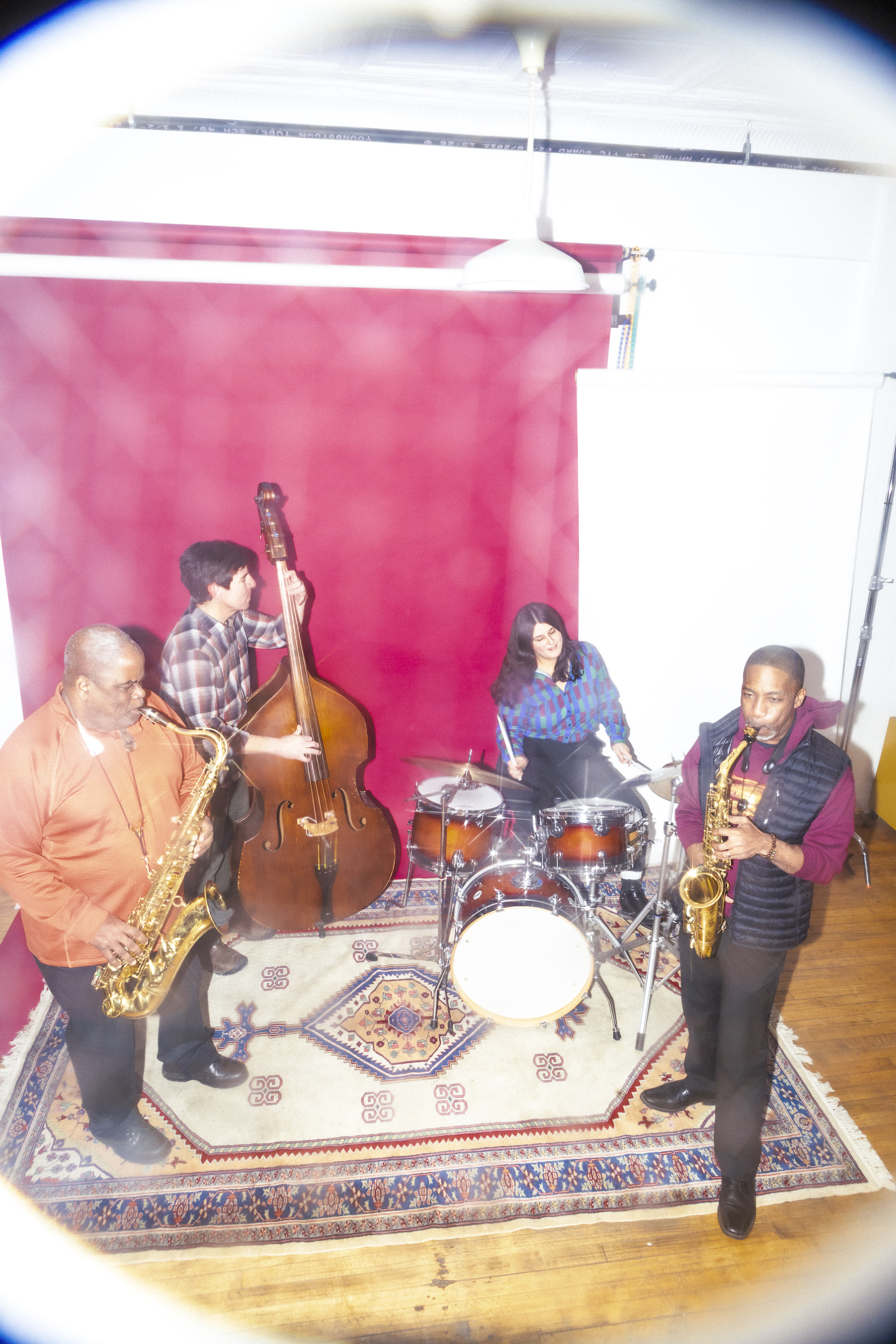
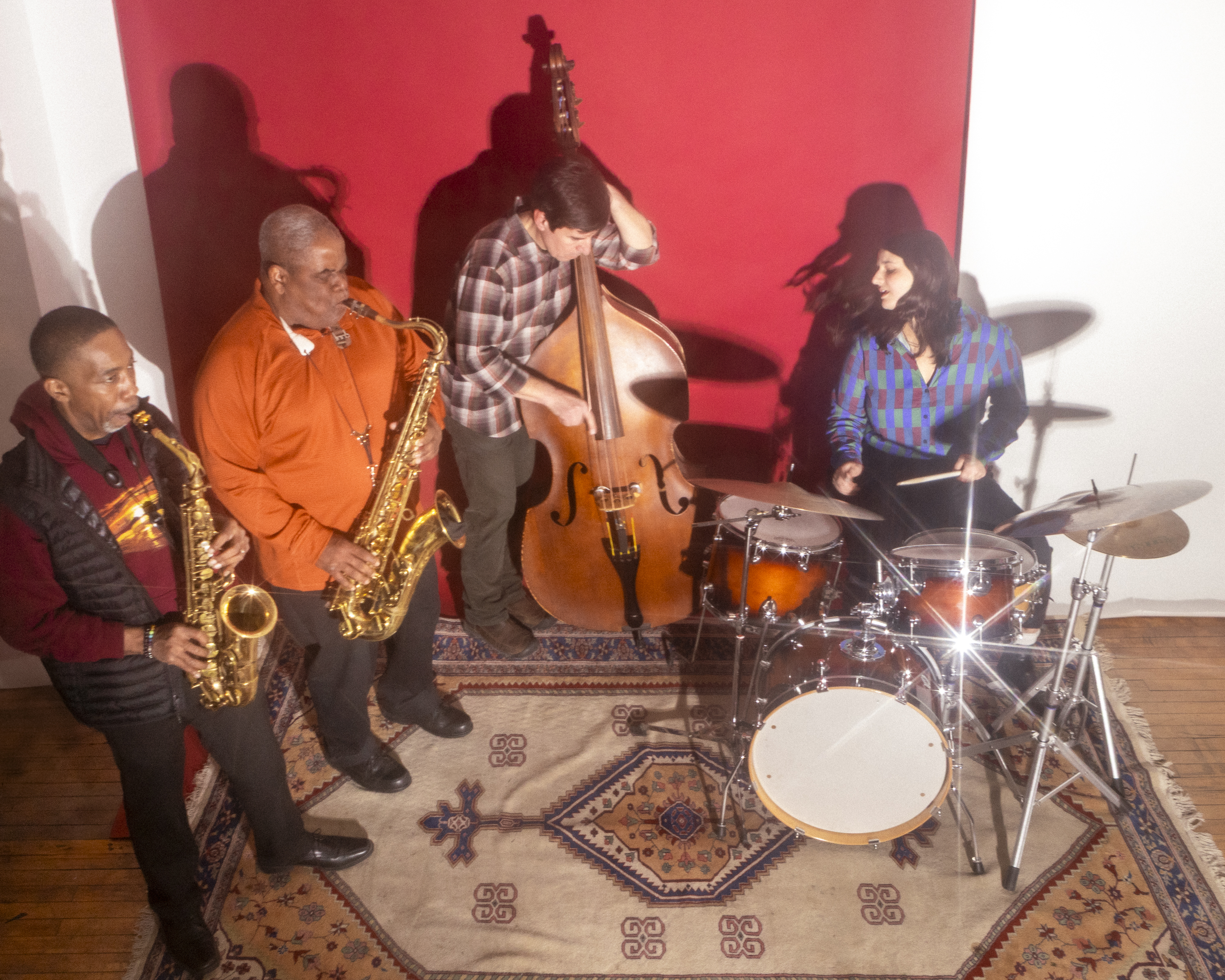
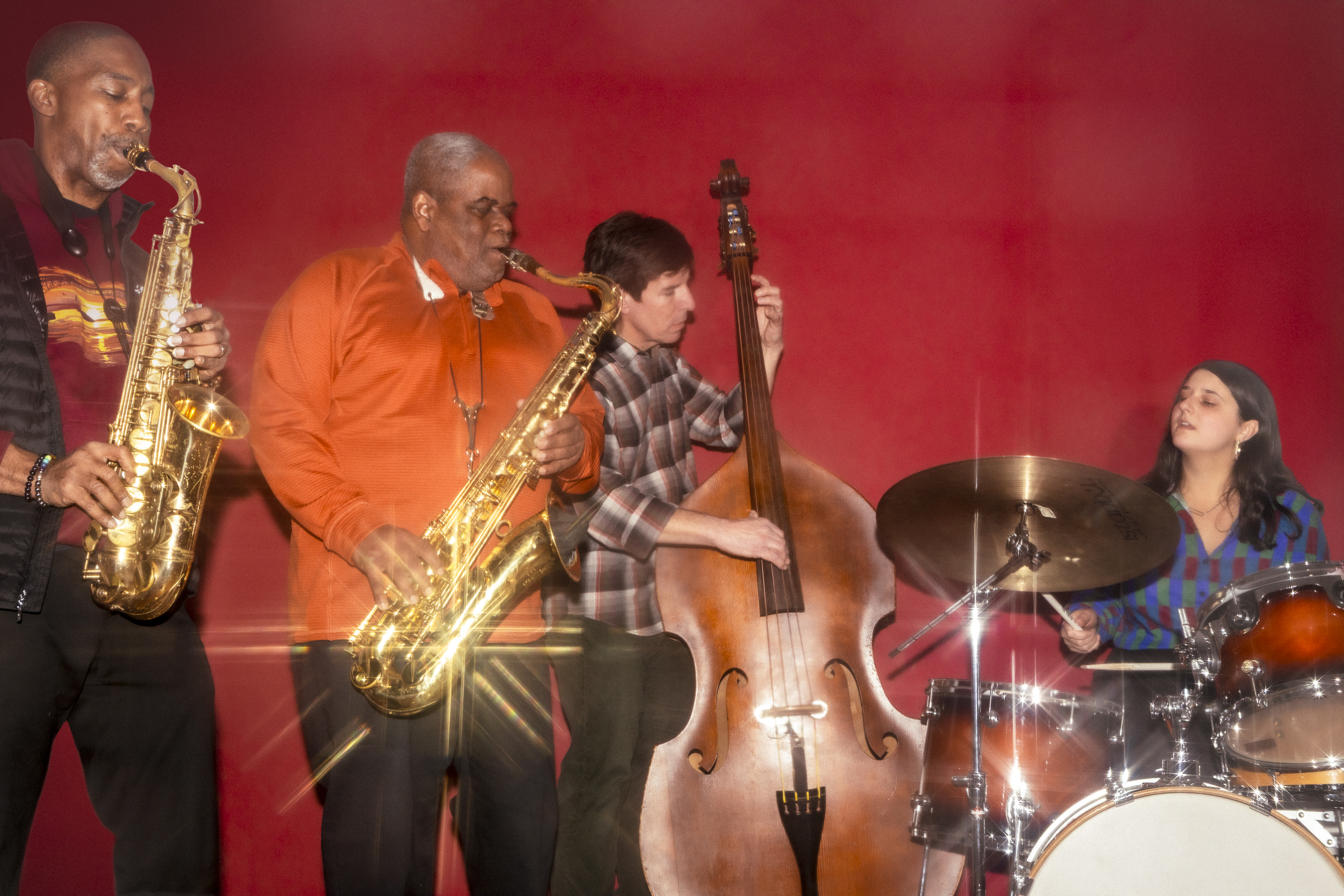
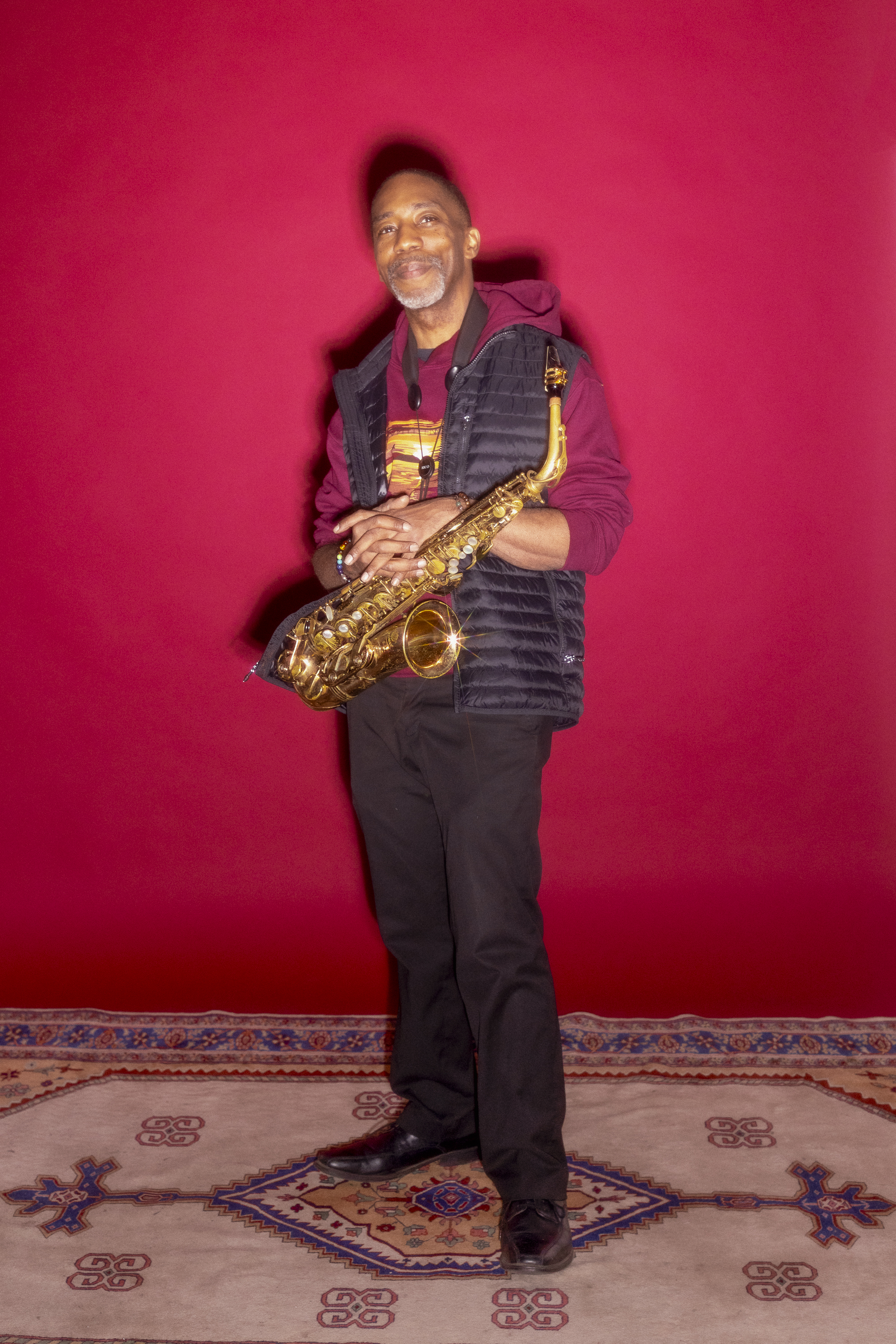
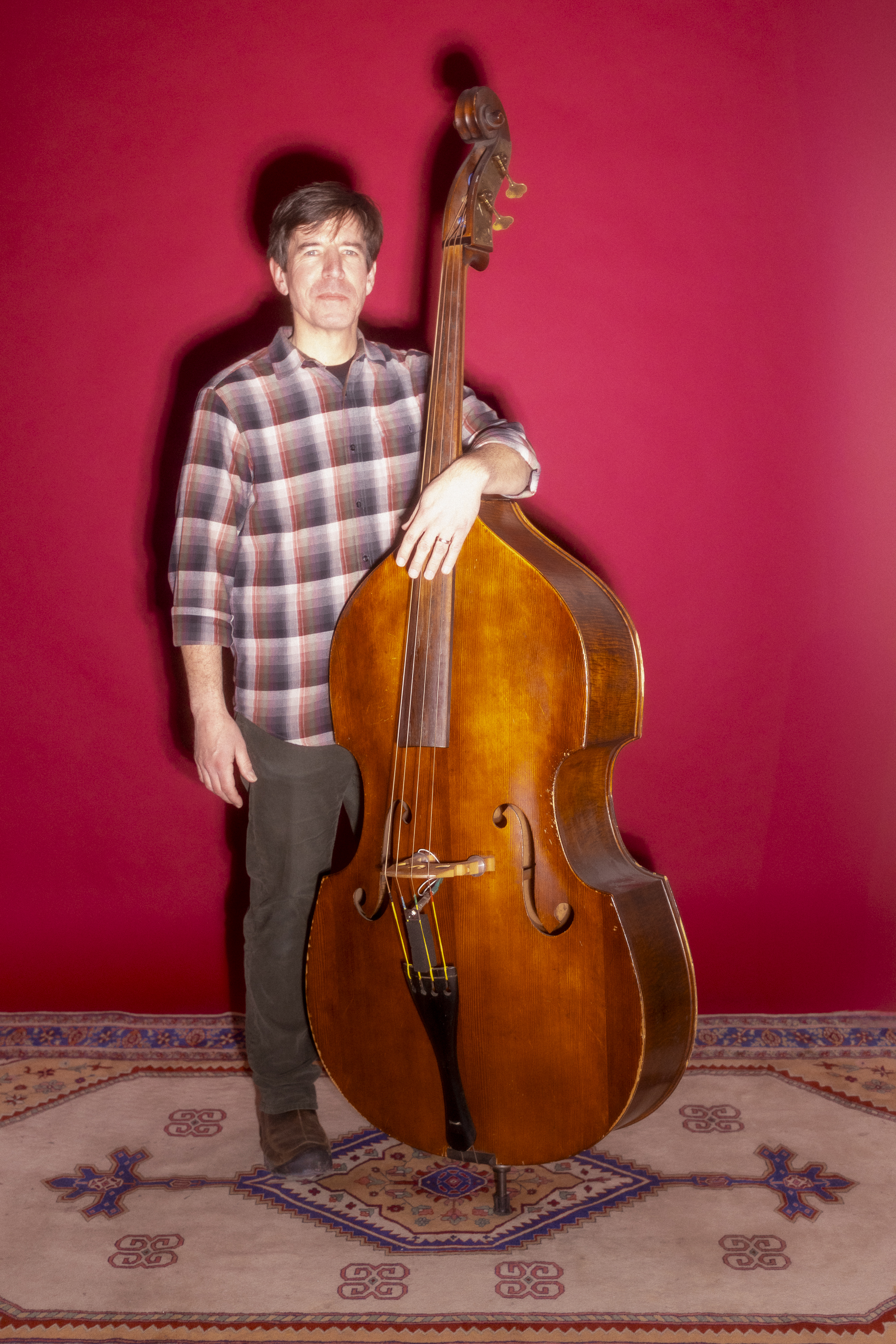
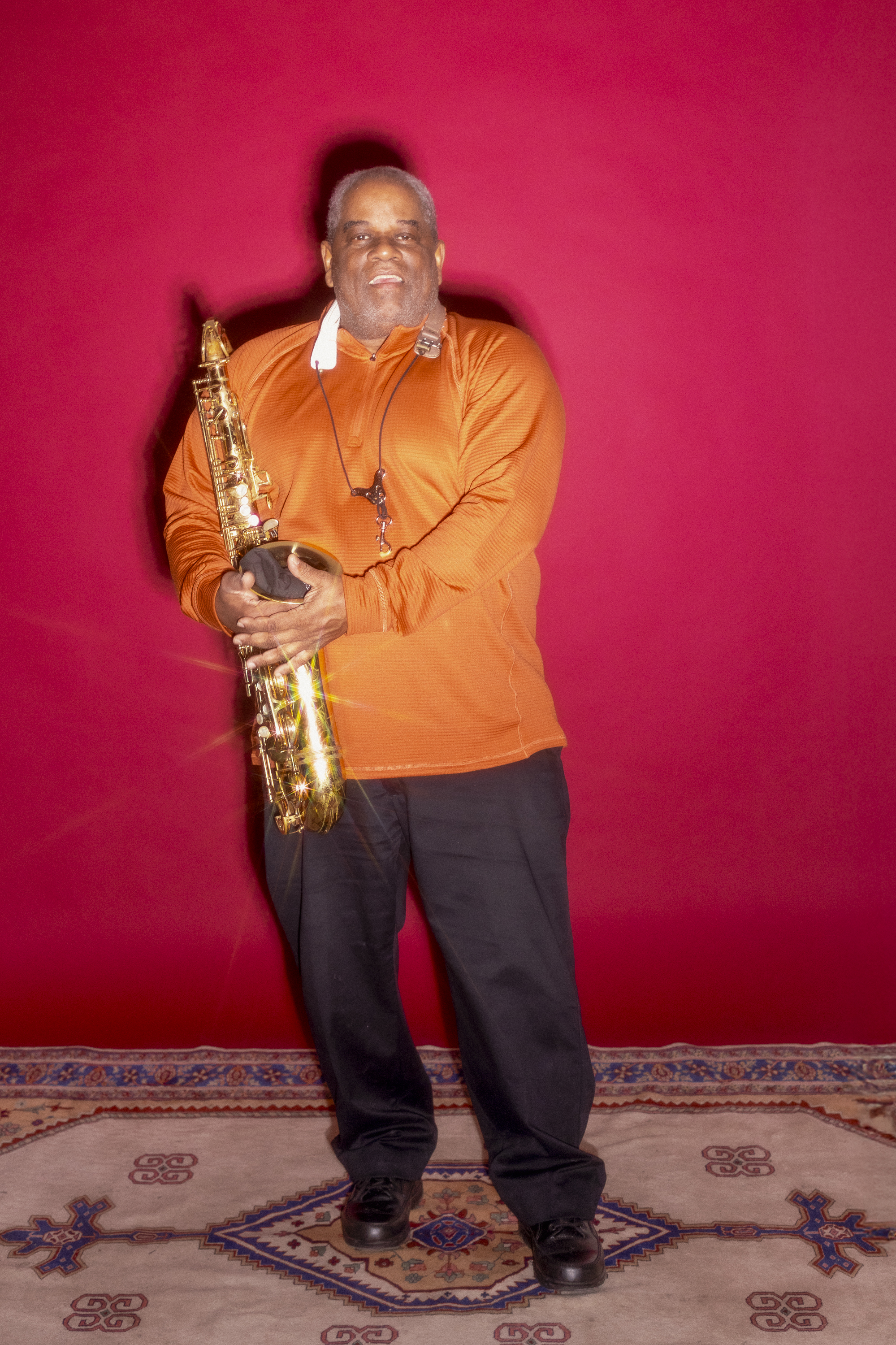
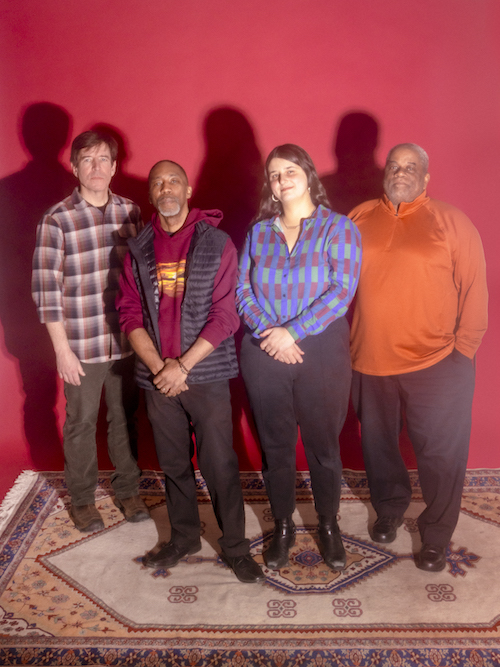
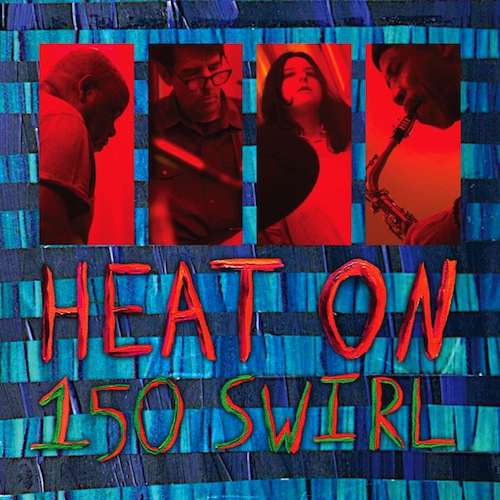
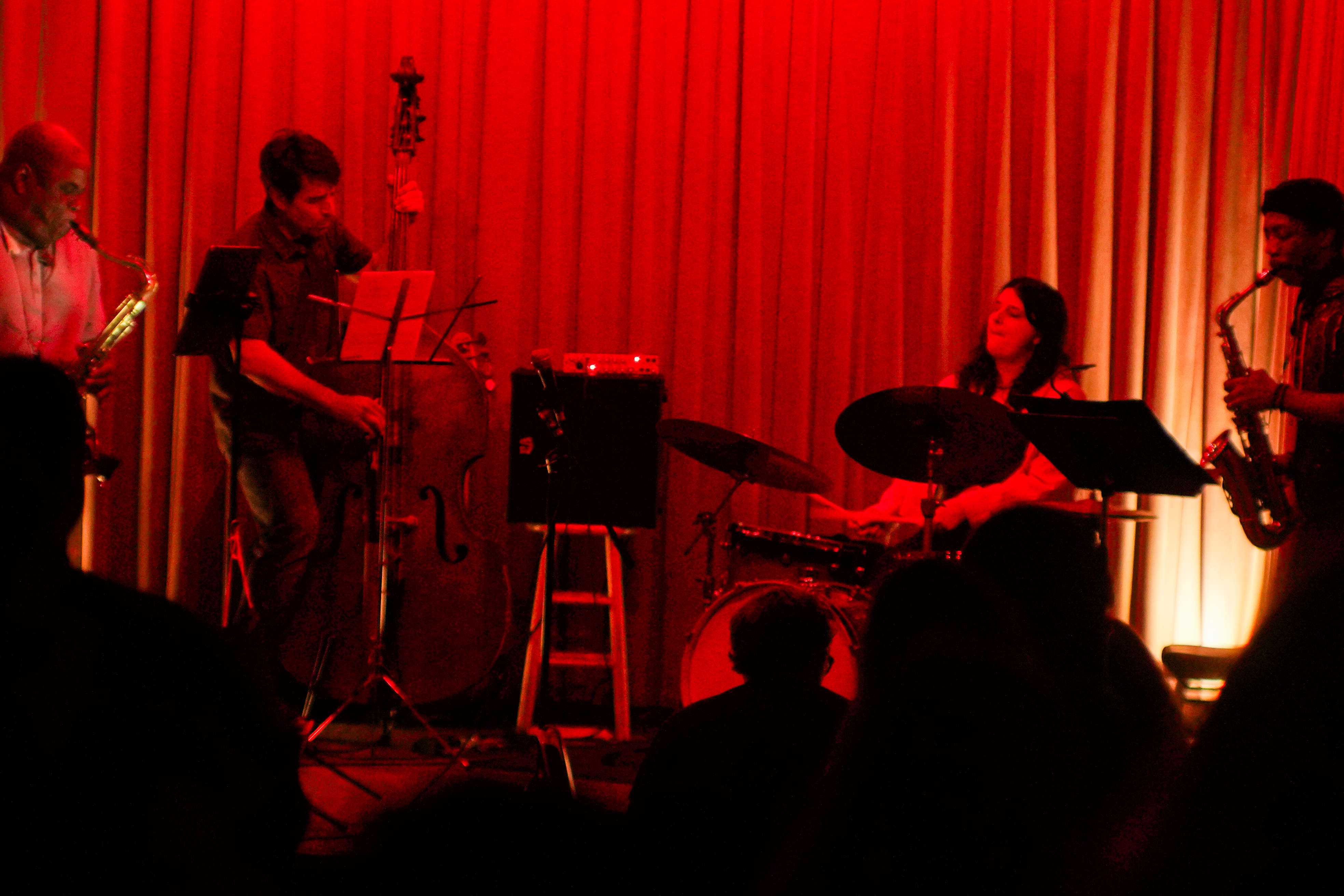
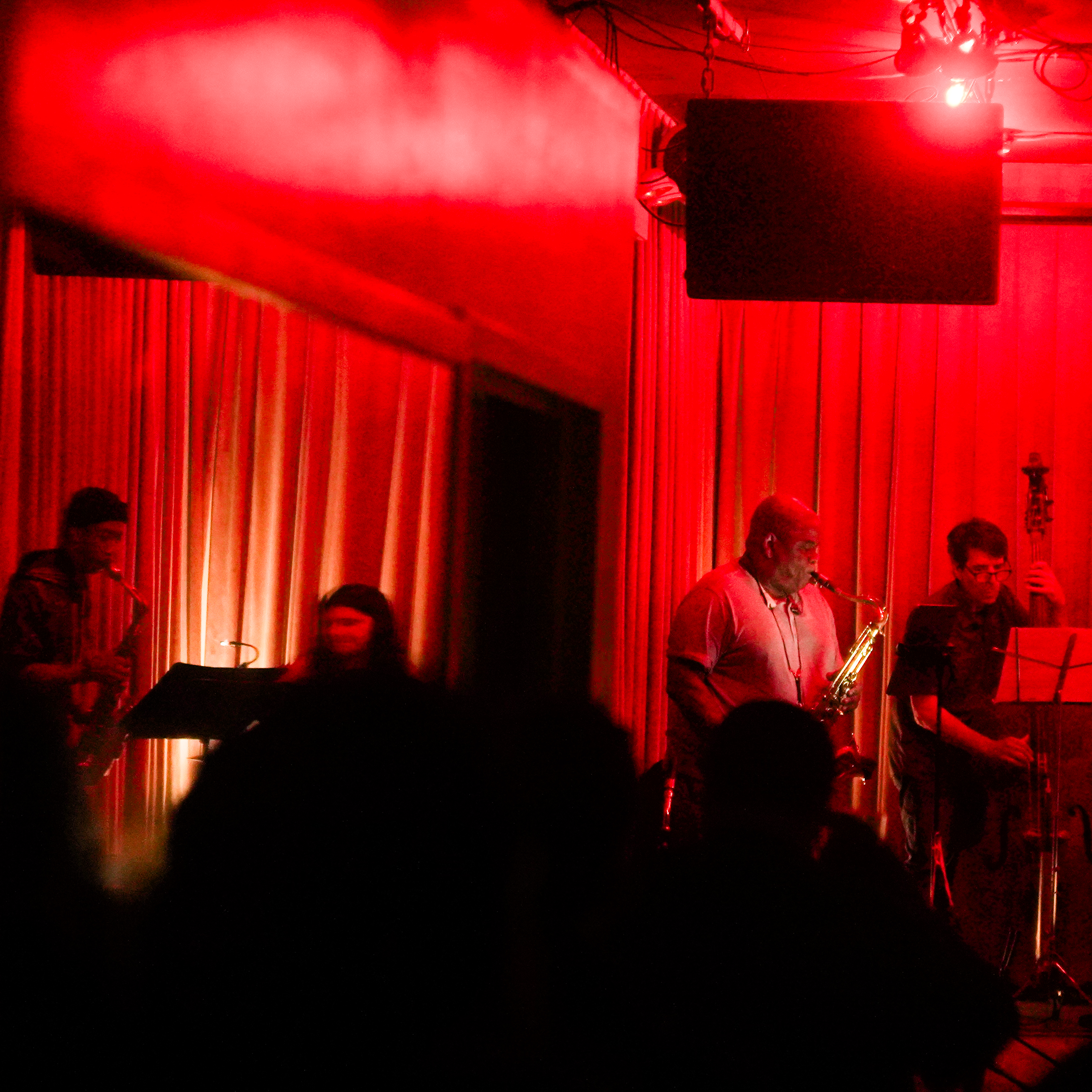
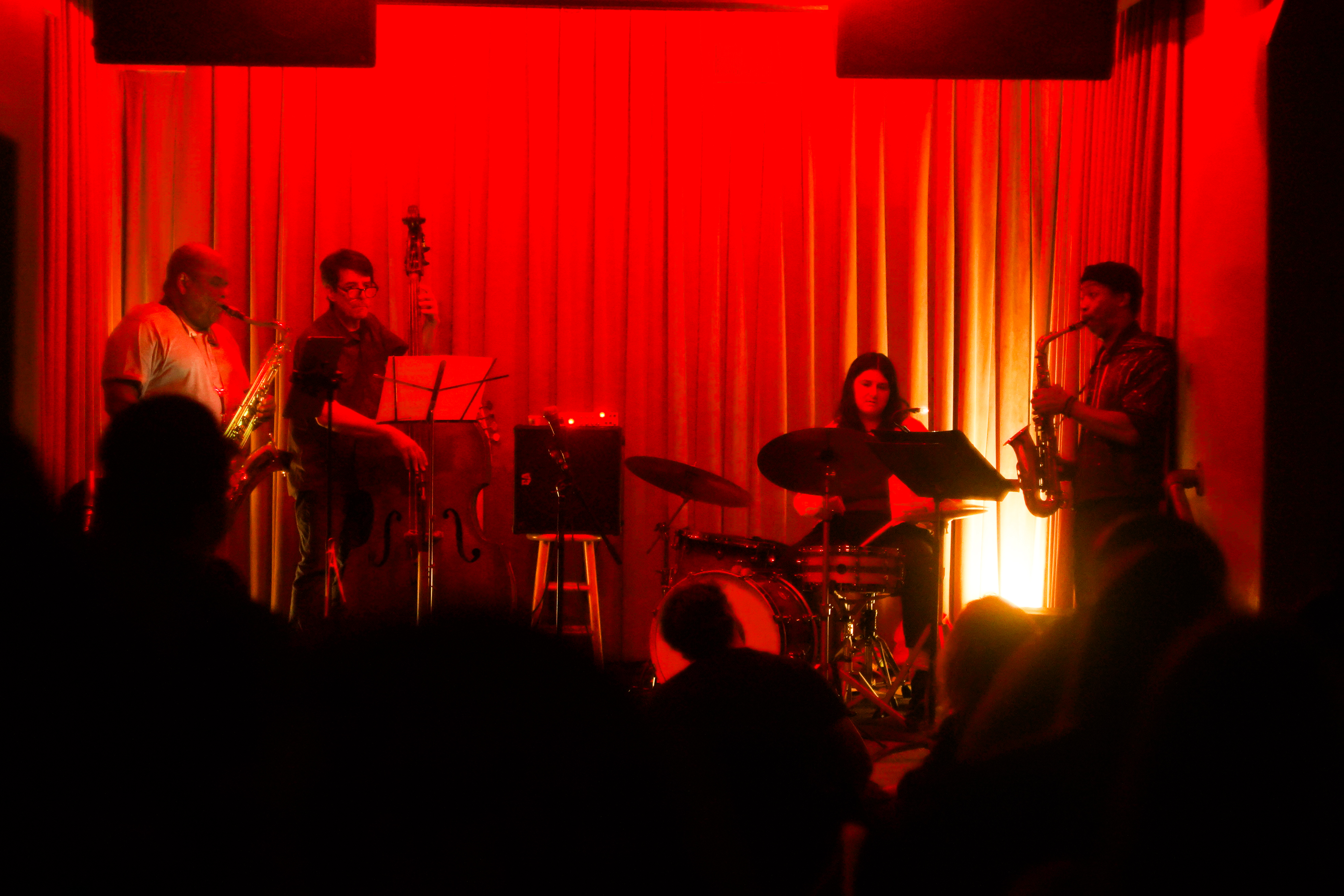
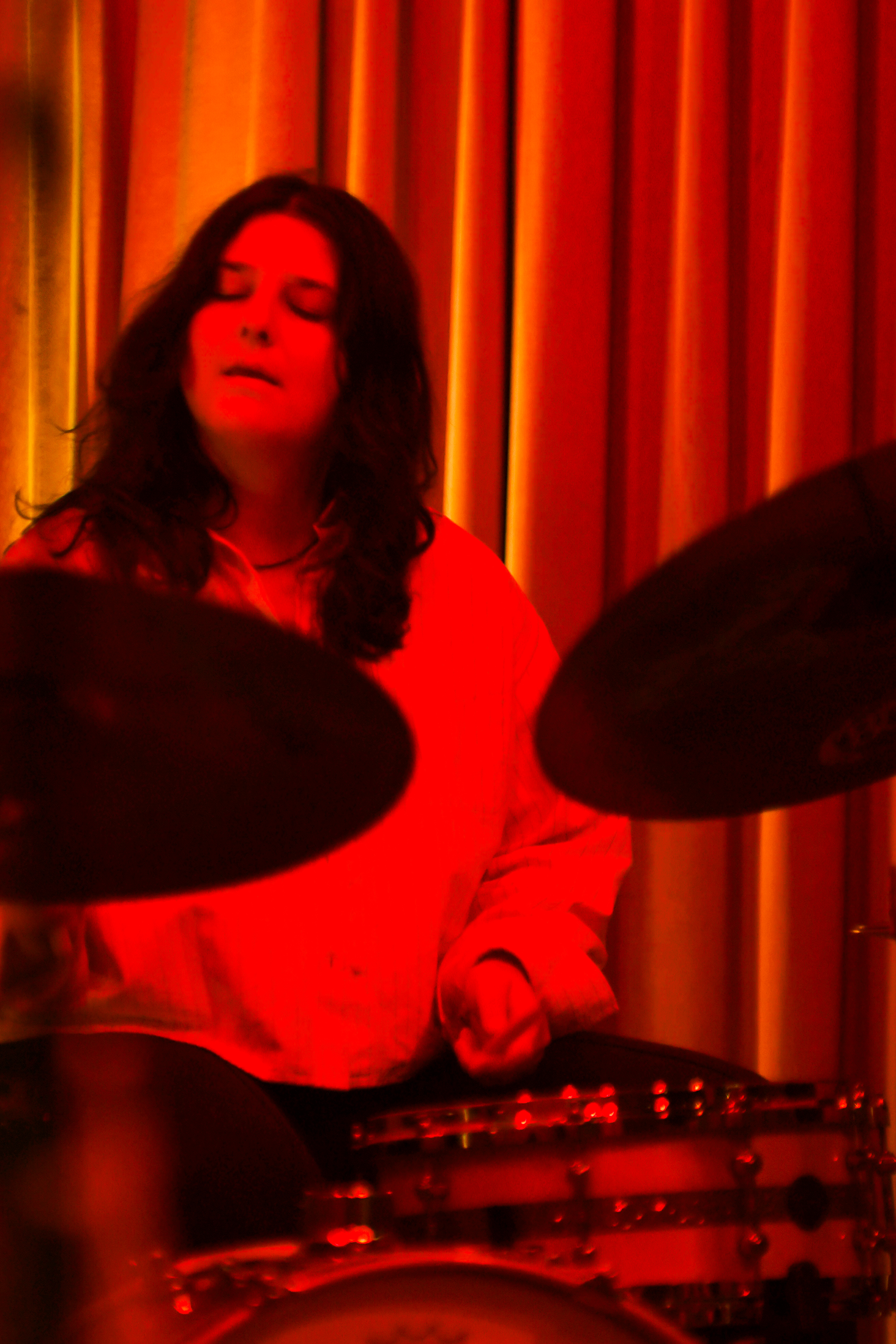
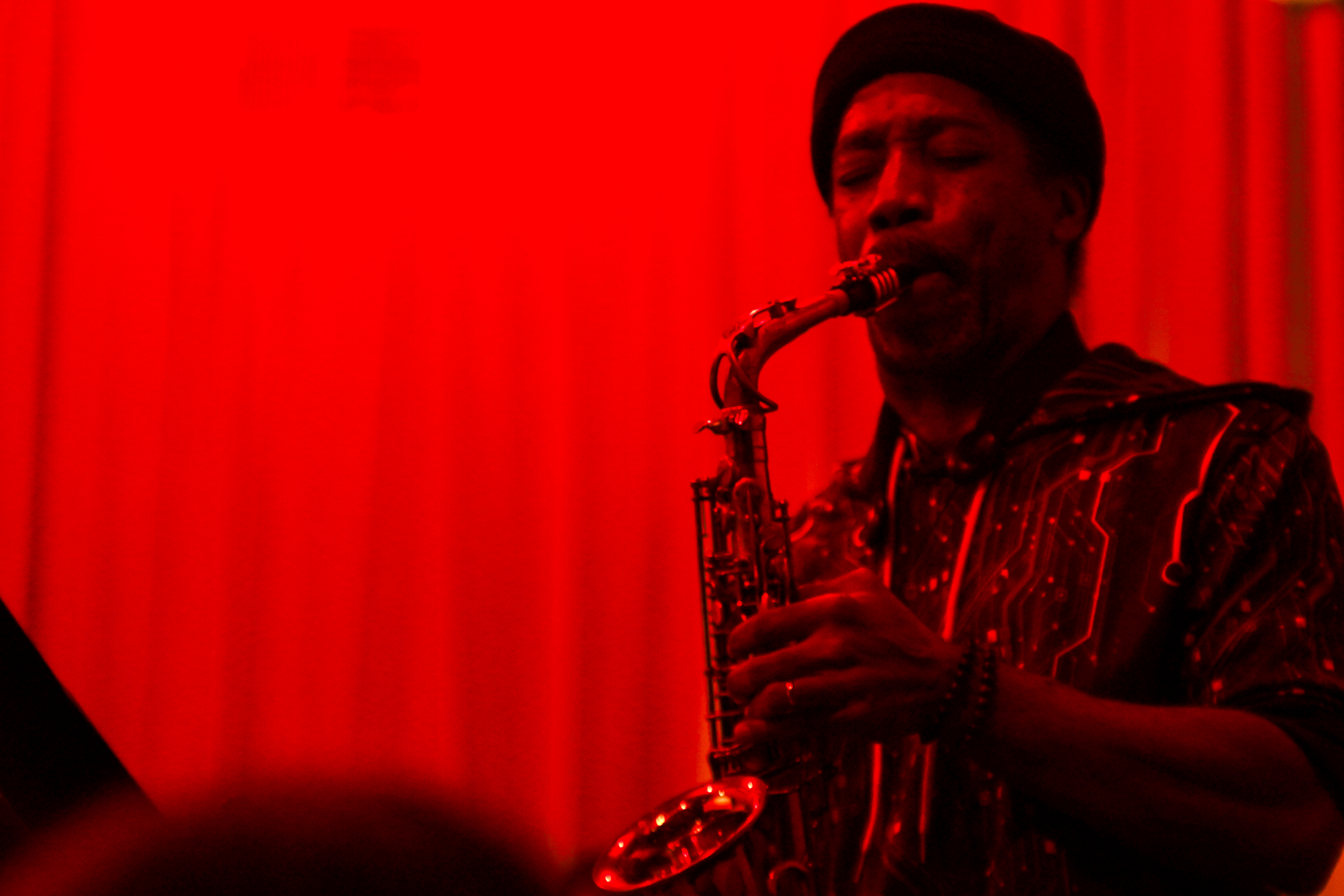
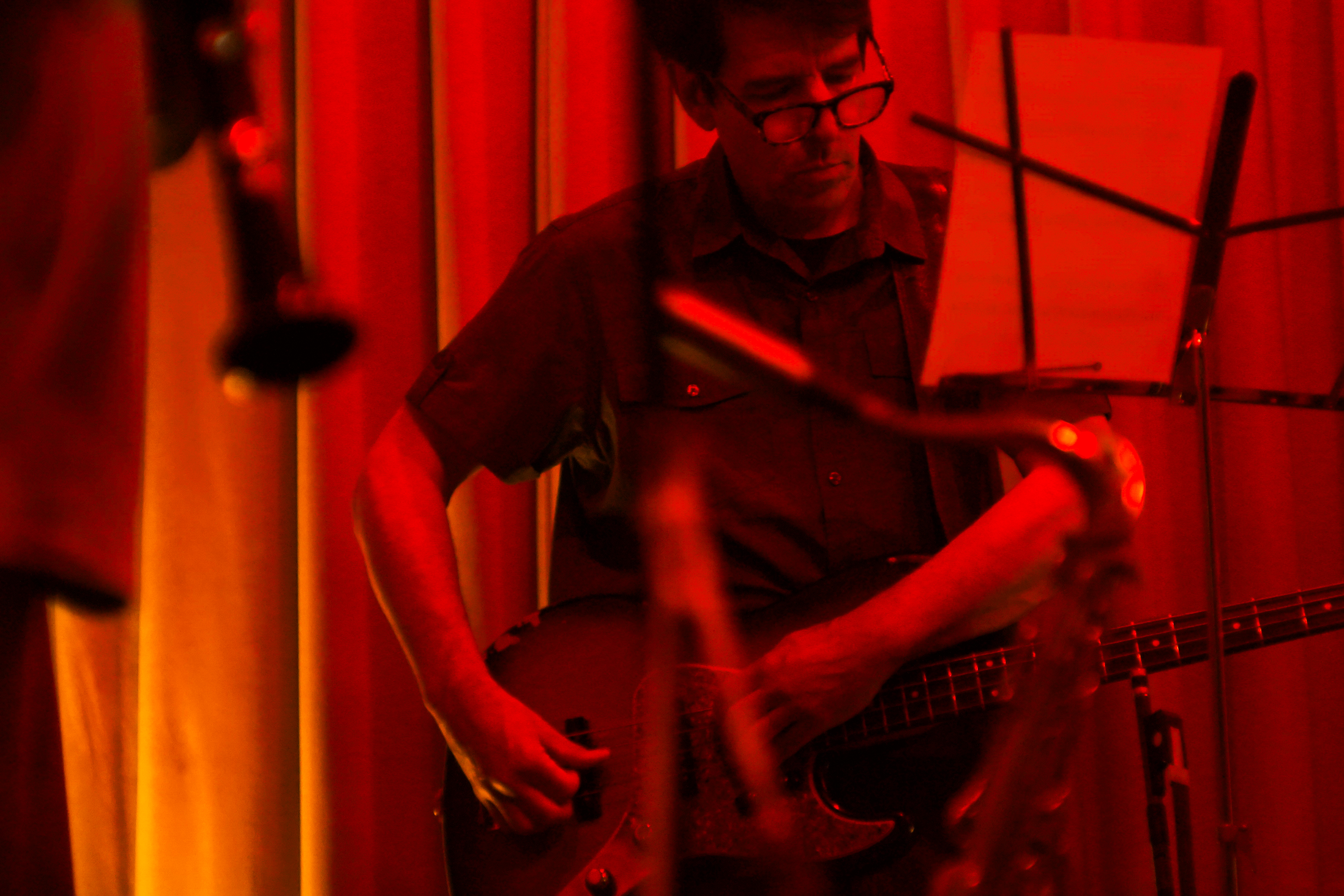
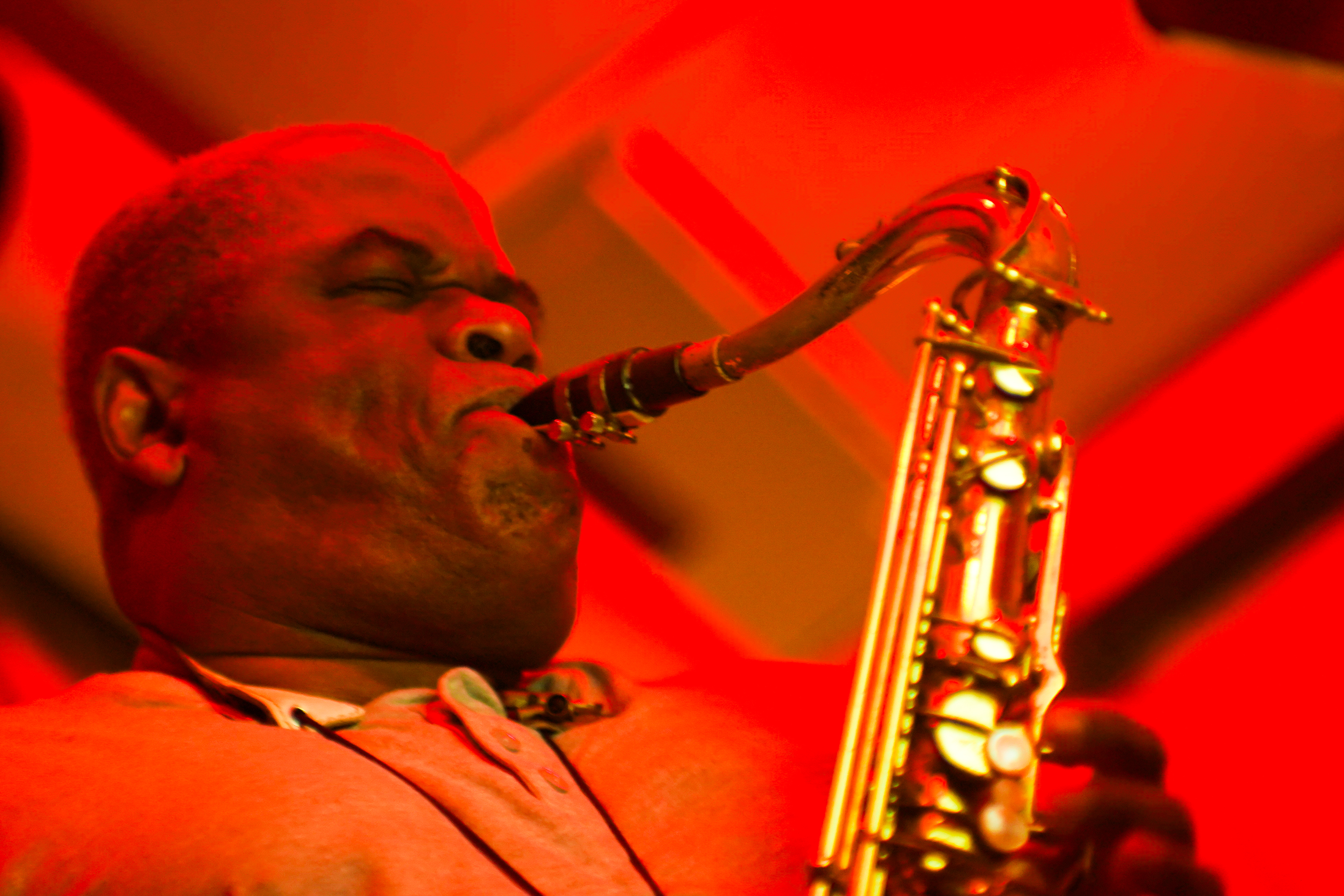
If drummer Lily Finnegan’s acclaimed 2025 debut album Heat On! was a love letter to Chicago’s tight-knit jazz scene, her blazing follow up 150 Swirl is a musical manifesto from an artist who knows the value of consistency. Like her incendiary first project, 150 Swirl is a Cuneiform release. The project features the same prodigious cast of players, and is designed to fuel creative flights by legendary Chicago tenor saxophonist Ed Wilkerson Jr., Chi-town alto sax great Fred Jackson Jr., and the highly versatile Nick Macri on upright and electric bass.
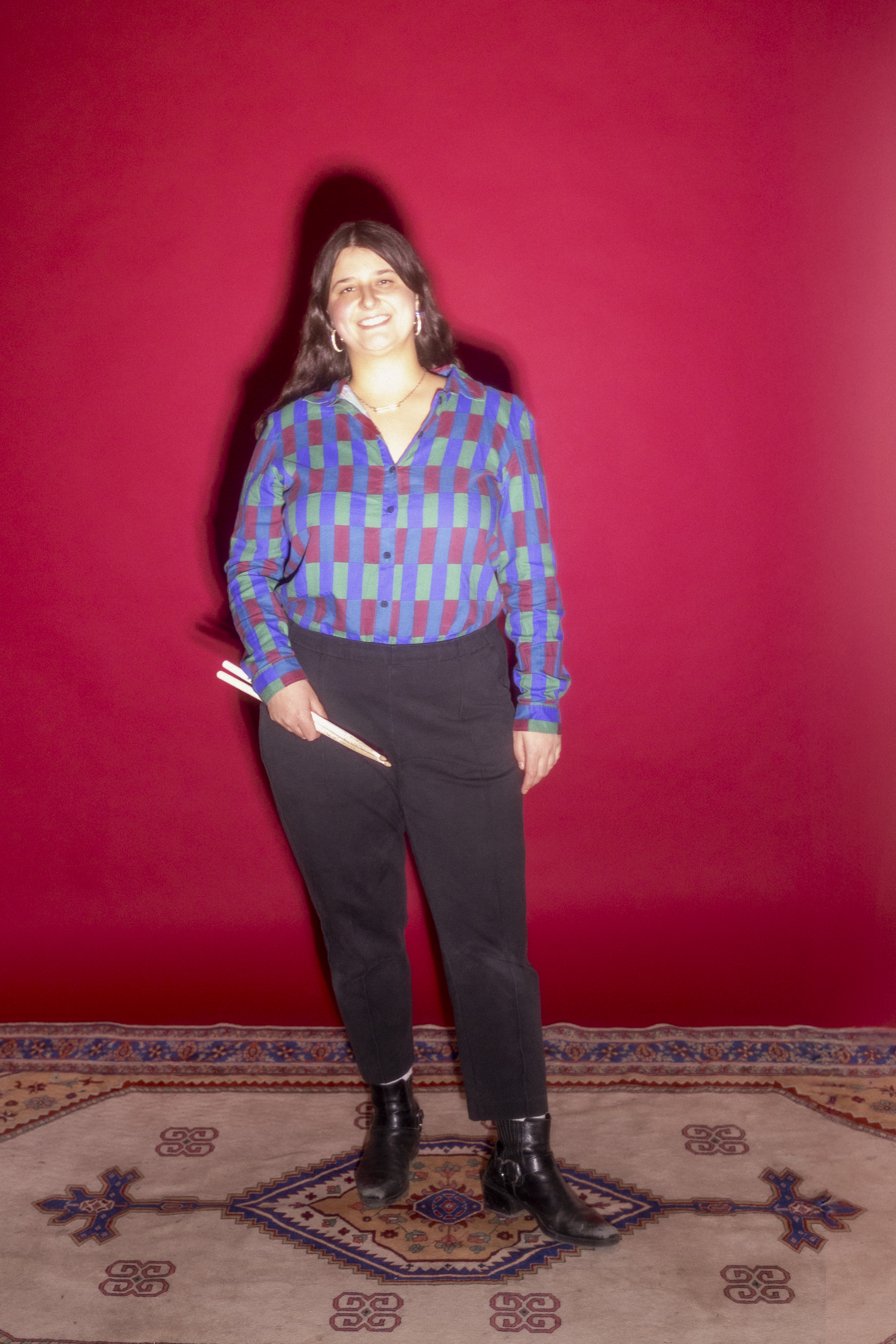
An essential player working across several overlapping scenes, including left-field jazz, punk and improvised music, the 28-year-old Finnegan has thrived by seeking out veteran masters.
She doesn’t take her era-spanning relationships for granted, but was recently reminded by a friend visiting from New York that she’s ensconced in a rarefied environment. “She said, ‘It’s so cool you have so many elders in your life. That intergenerational aspect is really lacking in New York,’” Finnegan recalls. “That’s part of what makes me so excited about this band.”
It’s entirely in keeping with this ethos that the album opens with Finnegan’s “Same Old Velvet,” a piece dedicated to the late saxophonist Fred Anderson’s long-running but lamented outpost of Chicago experimentation. Swinging with rough abandon, the piece solders together two fragments to create a kinetic, rambunctious tune that’s “very inspired by Roscoe Mitchell and Henry Threadgill, where elements of their work could paint a vibrant picture with sparse melodic information,” says Finnegan, who notes that she’s too young to have frequented the Velvet Lounge.
With Wilkerson’s liquid alto clarinet wending around Jackson’s quarrelsome alto sax, the song embodies a particular Chicago vibe in the way that “it swings but it’s also loose,” Finnegan says. “Sometimes people think outside music equals not playing in grid-like time. I like to keep swing in there that rubs against the grid, particularly when the music gets more chaotic.”
Macri’s powerhouse electric bass work steers “Eighty Too,” an extended form that unfolds like a brisk bus trip across town on dubiously paved roads. Wilkerson and Jackson play tag-team saxophones, feinting, darting, and circling around each other while responding to Finnegan’s muscular stick work. She’s similarly out front on “For H-Park,” which opens with a drum solo, accelerates into a headlong groove with an Afro-Cuban tinge that provides a magic carpet that sweeps the horns into a freer passage.
“I enjoy that it’s rough around the edges,” she says. “With this group, I like to write intricate, interlocking parts but also leave room for surprise when we variate from what’s written on the page.”
The mood changes abruptly with the insinuating “Lipstick Criminal Moonlight,” which moves from a brooding, almost obsessive theme to a series of teasing, deliberate passages. Defined by open space and minimal trap accents, the music turns droll and meditative before fading into silence. The calmer vibe continues with “Lovebird Nextdoor,” a luscious Mingusian ballad that unfurls with beatific grace. Wilkerson’s tenor sax sounds magnificent as he delivers the melody with unfussy poise. The finely calibrated dynamics give the piece a transparent feel as Finnegan suggests a 12/8 beat.
The conversational feel takes a different turn on the mostly through composed “Drift, Flip, Spiral-Like,” which proceeds in distinct sections guided by Finnegan’s drum call, “a form you hear in samba,” she says. “I created a rhythmic cue that calls the band back in to the melody.”
The album closes with “Rubber Rose,” an idiosyncratic piece that opens with Macri on electric bass and Jackson and Wilkerson on clarinets. It’s a masterly case of setting two parts of the ensemble on disparate paths, as drums and bass engage in one dialogue while the horns carry on their own vigorous discussion. Instead of cacophony, the tune ends the album with intrigue that draws listeners into the action.
Finnegan’s work has attracted widespread notice. She was recently awarded a Next Jazz Legacy fellowship for early-career women musicians through New Music USA, an initiative spearheaded by drum great Terri Lyne Carrington. Paired with Moor Mother and pianist Marilyn Crispell, she’s already planned a recording session with Crispell, an artist who brings her own rigorous approach to outside/in improvisation.
Born in Chicago and raised in nearby Evanston, Finnegan started playing drums as a tween. Drawn at first to punk and alternative rock, she started delving into jazz in high school, making connections between “improvised, free music and punk,” she recalls. “I was drawn to music about liberation and bigger topics, and less concerned about fitting in to a genre box.”
At the University of Wisconsin–Madison she started with sociology rather than music, but ended up spending as much time playing drums and graduated with a double major. During a summer in Boston she connected with drum star Terri Lyne Carrington, who recruited her to Berklee’s master’s program. She earned the degree in the thick of the pandemic via a full scholarship to the Global Jazz Institute, a 20-person cadre led by Danilo Perez. Finnegan was also part of the Institute of Jazz and Gender Justice, where she was mentored by Kris Davis, Linda May Han Oh, and Carrington (on her “Music for Abolition” thesis, as well the Visualizing Abolition Exhibit at the University of California Santa Cruz).
“I’ve been blessed with great mentors, people who’ve supported me being curious about all these different styles and histories,” she says. “Allison Miller is another major one for me.”
Returning to Chicago in 2021 she connected with Ken Vandermark through Kris Davis. He invited her to join a new band, Edition Redux, and she got a front row view into his compositional process. “There are so many different ways to write and organize music,” she says.
Building on her Berklee thesis project, “Music and Abolition: Creating a World Without Policing- Music’s Role in Imagination, Experimentation, and Collectivity,” Finnegan has continued to study and observe the way power structures, history, and social movements have shaped the Chicago scene. This is not a passive process. She’s one of the curators of the Option Series, a showcase for contemporary approaches to improvisation and composition held at Experimental Sound Studio.
Finnegan is also a festival organizer and a member of the cooperative Catalytic Sound, a creatively charged constellation of players that includes violinist/vocalist gabby fluke-mogul, her partner in the queer-punk-meets-avant jazz duo that released the 2024 album Throw It In The Sink. She recently released Live at Elastic Arts by the Lily Finnegan Double Drum Quintet, a free improv project featuring veteran AACM drummer Vincent Davis, “the Chicago elder and teacher who plays a lot with Roscoe Mitchell,” she says. There’s also the GAF Trio with saxophonist/guitarist Will Greene and cellist Ishmael Ali. She’s performed with saxophonist James Brandon Lewis, guitarist Bill Orcutt, vocalist Fay Victor, multi-instrumentalist Patrick Shiroishi, guitarist Brandon Seabrook, and storyteller/multi-instrumentalist Shanta Nurullah, among many others.
Clearly, Finnegan contains multitudes. From punk rock to free improv to post-bop jazz tunes, “the variety of projects help me connect with the different sides of myself,” she says. And by connecting to herself, Finnegan has spun a vast web of relationships that fuel her creative evolution. With 150 Swirl she’s fed a roiling cauldron of a quartet that has galvanized her work as a composer, bandleader and player. It’s a bold and enthralling statement that would set her apart in any generation.
150 Swirl press release












 HEAT ON