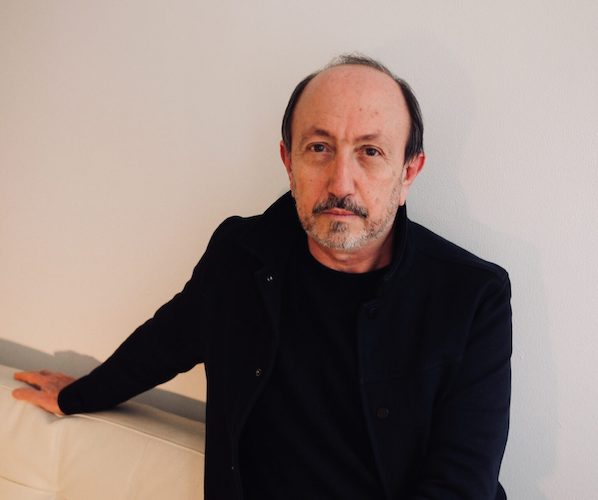


FRÉDÉRIC L’EPÉE

His music was born out of a wide variety of influences: classical music with a violinist father, discovery of rock music in the 1960s, progressive rock, contemporary and experimental music in the 1970s. At the same time he also discovered French classical music, especially that of the early 20th century. One of his great frustrations is that his favorite French composers, Claude Debussy, Eric Satie, Maurice Ravel and Gabriel Fauré, never composed anything for guitar. Some of the pieces in Contre courant, such as Sarabande, Les Sonneurs, and Trois Miniatures, are like nods to these composers and transport us to impressionistic and colorful atmospheres. Contre courant offers us subtle music which, if we take the time to let ourselves be carried away, is both soothing and invigorating.

Refusing to choose between his self-taught rock background and his classical training as a contemporary composer, Frédéric L'Epée assembles a repertoire, both with Yang and as a solo artist, that builds bridges between the two genres, drawing on jazz and world music along the way. 


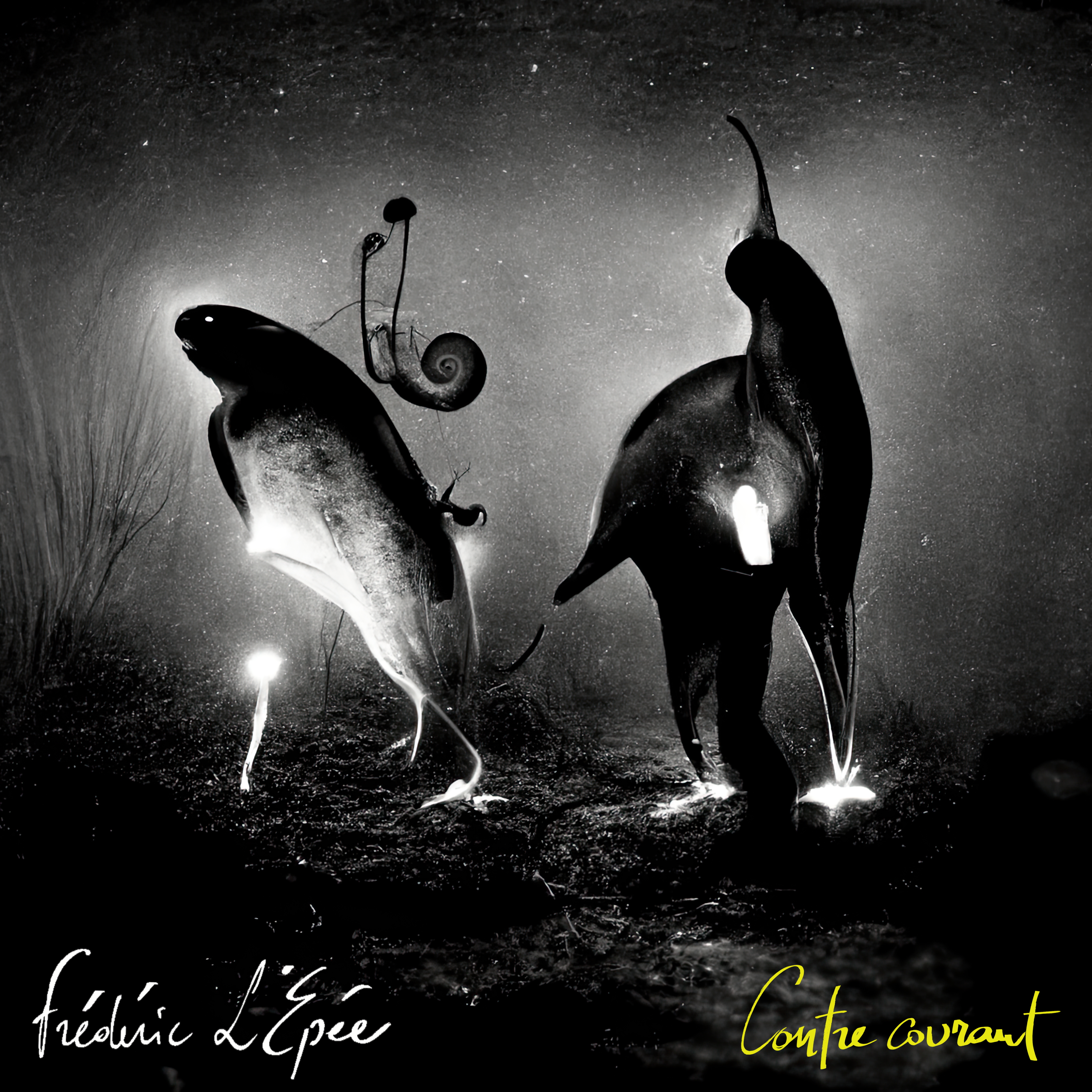
CONTRE COURANT


RUNE 3408

For many, electric guitar brings to mind rock music, distortion, dramatic poses, and frenzied solos. But some guitarists develop different, sometimes even opposite styles. Frédéric L'Epée is one of them

In this album of solo electric guitar, except a few sound effects here and there the guitar sounds mostly natural, nothing complicated or flashy, no guitar solo or spectacular licks.

The emphasis is on the delicacy, the richness and the variety of sound.
Frédéric L'Epée's goal with this album, as with his previous one, “12 pieces for solo electric guitar”, is to give the instrument a solo repertoire similar to that found for classical guitar and classical instruments in general. A true solo recital where the electric guitar stands on its own.

Compared to Yang, his band consisting of two guitars, bass and drums, Frédéric L'Epée's solo music is intimate, introspective, and secretive, and Frédéric delivers it to us as if unveiling a personal collection of precious stones. In his own words:
“In the Tao Te Jing, Yang is the principle of openness and brightness, of active, solar force. Yin is the principle of internalization, conservation and depth, like a source from which we draw, a valley, a solace. My solo music is the Yin facet of my musical personality, an expression of my most intimate and secret emotions, which I share with restraint.”

His music was born out of a wide variety of influences: classical music with a violinist father, discovery of rock music in the 1960s, progressive rock, contemporary and experimental music in the 1970s. At the same time he also discovered French classical music, especially that of the early 20th century. One of his great frustrations is that his favorite French composers, Claude Debussy, Eric Satie, Maurice Ravel and Gabriel Fauré, never composed anything for guitar. Some of the pieces in Contre courant, such as Sarabande, Les Sonneurs, and Trois Miniatures, are like nods to these composers and transport us to impressionistic and colorful atmospheres. Contre courant offers us subtle music which, if we take the time to let ourselves be carried away, is both soothing and invigorating.

Refusing to choose between his self-taught rock background and his classical
training as a contemporary composer, Frédéric L'Epée assembles a repertoire, both with Yang and as a solo artist, that builds bridges between the two genres, drawing on jazz and world music along the way.
Contre Courant press release

Buy this album


MEDIA
For press and media: cover art and high resolution images are available below for download (click thumbnail, right-click image and select "Save As.."). Please credit the photographer (when available) and "Courtesy of Cuneiform Records". For more information, click here.

CONTRE COURANT

PRESS RELEASES
Contre Courant press release

facebook twitter
© Cuneiform Records 2014
ARTISTS | TOURS | ABOUT | DISTRIBUTORS | STORE | CONTACT | LICENSING

Subscribe to Cuneiform's newsletter!